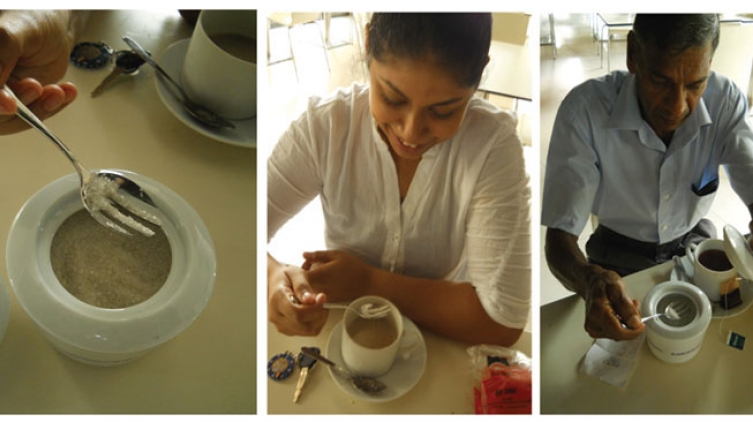
Colombo - Customers at several city tea and snack restaurants had a unique experience on World Diabetes Day. They found several containers of sugar with a very distinctive set of spoons attached to them.
Anybody who needed their daily fix of sweetness had to literally cut down on their unhealthy craving as the utensils in question had several strips of metal removed from them, thereby drastically reducing the amount of sugar that was consumed. On closer and automatic inspection of the sugar dispensers, the lines "Be careful with the sugar" and "The Diabetes Association of Sri Lanka" could be read.
On the same day a parallel multi-media campaign in English, Sinhala and Tamil was also run. Additionally, there was a series of television panel discussions on this topic as well.
This fresh idea was created to highlight a very serious issue. Two million Sri Lankans have diabetes, and if nothing was done two million more of their countrymen would join them. In short diabetes was becoming a major threat to the health of Sri Lankans everywhere. This message had to be brought across to the people of this nation on World Diabetes Day. That was the brief from the Diabetes Association of Sri Lanka to Saatchi & Saatchi.
After viewing the subject from several different angles the agency came up with this novel idea. The thought was to physically prevent people from consuming too much sugar. This in turn triggered their thought processes and made them aware of the prevalent risk. And going by the responses, it seemed to have worked admirably.